CHILL-ICE II: Longer, better, deeper

Since the CHILL-ICE II (Construction of a Habitat Inside a Lunar-analogue Lava tube in Iceland) campaign, these Icelandic missions have formed the backbone of ICEE.Space’s high-fidelity analogue astronaut campaigns.

From "Surviving in Space", to Lunar Living

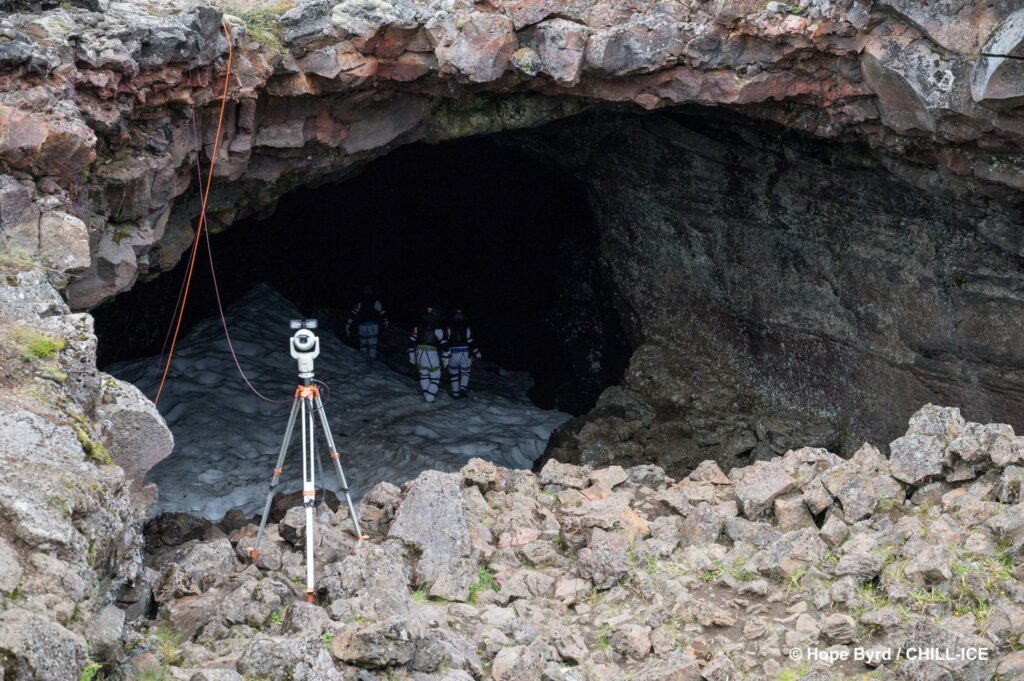
The initial missions of CHILL-ICE, Luna and Lava, were focused on the set-up of a temporary habitat on, or rather underneath, the simulated lunar surface in the lavafields of West-Iceland. Both missions were completed successfully, showcasing that our in-house geologist’s wild dreams of subsurface living as an option for future lunar survival is noto only feasible, but a potential residential goldmine in terms of natural scientific research opportunities. 

At the same time however, these two short proof-of-concept missions were exactly that: Short, and merely a proof-of-concept of human survival. Humans can survive with minimal amounts of sleep for a day or two, exist with little or suboptimal food choices, and knowing the mission only lasts just under 60 hours, means a lot of leniency in interpersonal relations, and enough patience and stress tolerance to stretch for most of the mission. 

Future humans, in a semi-permanent lunar habitat however, will be cohabiting on a much different scale. More intricate mission planning, daily scheduling, getting into a daily rhythm, and creating a work-life balance, that was something still lacking during the initial two missions of CHILL-ICE. 

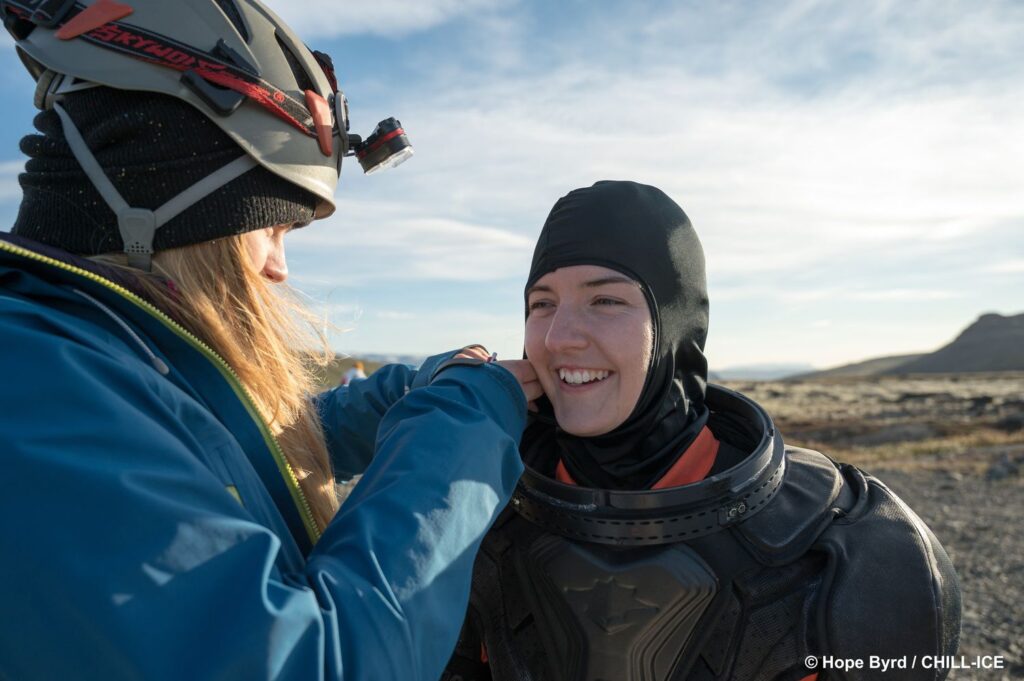
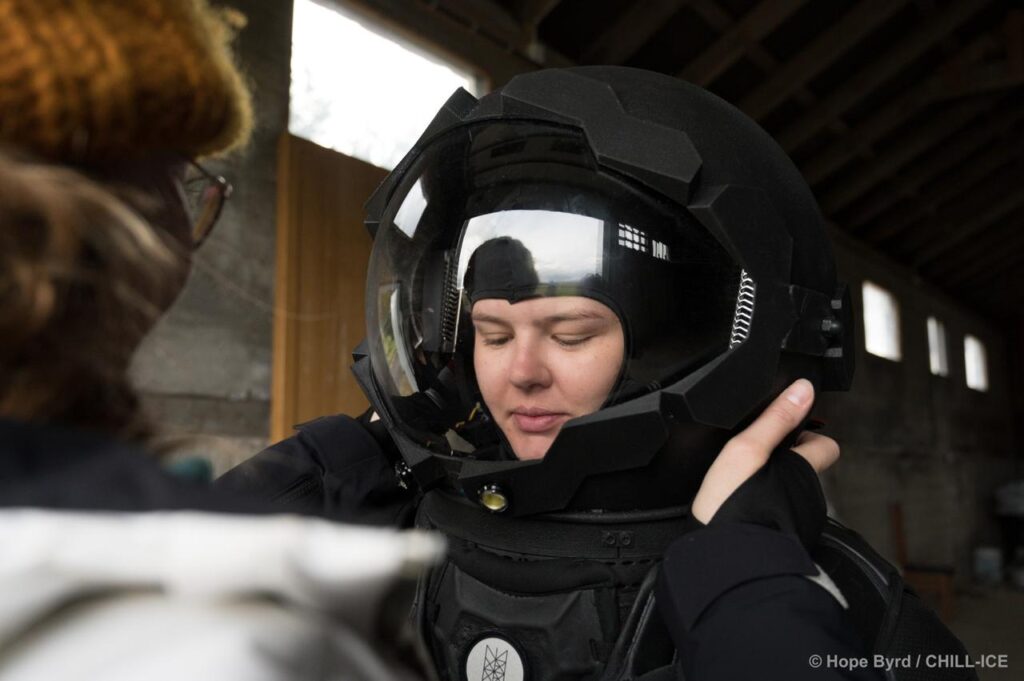
CHILL-ICE II returned to the lava fields 

– RESEARCH –

Pioneering Research
that Shapes the Future.

APICES has multiple research foci—the three main pillars being Robotics, Human Factors, and Environmental Science - which respond to several Spotlights in Terrae Novae 2030+ strategy for investigation of the Moon and Mars.

UV-Space
Laundry​

UV light is investigated to clean garments in “space”, i.e., space laundry, to mitigate the detrimental effects of prolonged space exposure like infections and allergies, caused by foreign microbes. 

With this cutting-edge technology, humans will be able to live much longer in space without needing fresh clothes, an often overlooked hurdle to long-term space habitation.

Habitat
Inspection

This study explores human-machine interactions in the context of inspecting extraterrestrial environments. Data collected provides crucial insights that enable optimisation of algorithms and operations to conduct activities like navigation, construction, excavation, and sample collection. By unravelling the mysteries of human-machine interactions in space, we forge a path towards safer, more efficient, and sustainable extraterrestrial endeavours.

BATS Drone

While extreme environments by nature can be difficult to navigate through for a human,  robots can be remotely manoeuvred through unstable, narrow, extreme terrains. The BATS drone project aims to use a drone with a spectral reflectance narrowband sensor to map the Santander caves’ biome. By automating the entire process of environmental data gathering, processing and operations, analogue missions can  become much safer and more efficient. 

Emergency Scenario Simulation

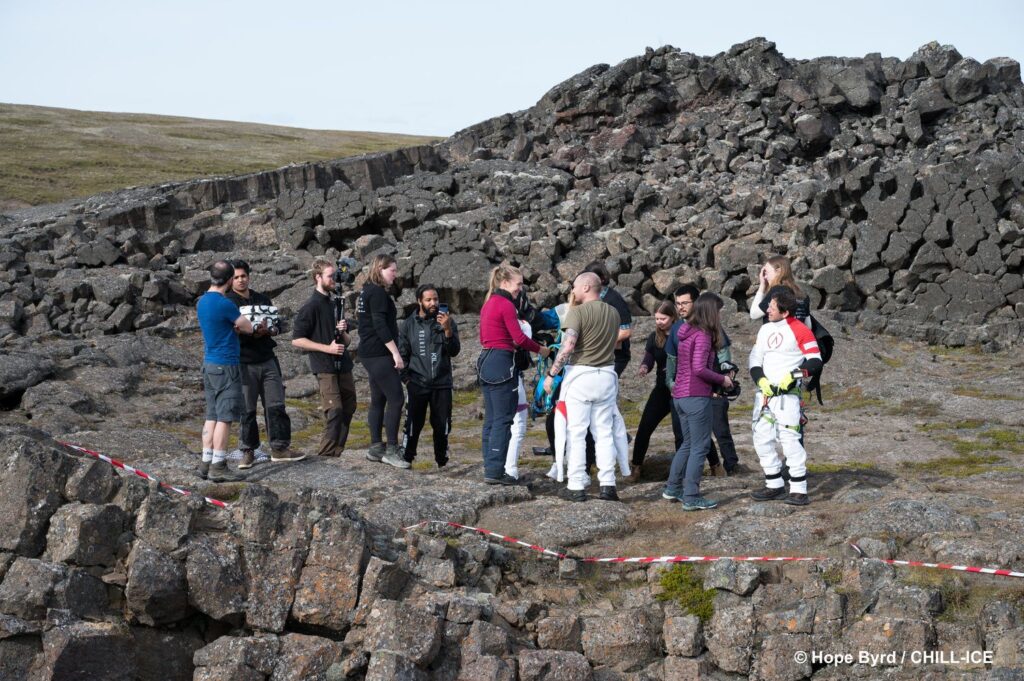
In high-stakes missions and extreme environments, success hinges on constant vigilance and flawless teamwork. In this simulation, the team faces a critical challenge and is asked to perform an Extravehicular Activity to rescue an injured crew member. Navigating uncharted territory outside the habitat, the team must locate and aid the crew mate executing a strategic search and rescue operation for a safe return. This study explores teamwork’s core and analyses psychological responses in adversity, uncovering pivotal factors that shape emergency response outcomes.

Mars
Solar Day

This study explores human-machine interactions in the context of inspecting extraterrestrial environments. Data collected provides crucial insights that enable optimisation of algorithms and operations to conduct activities like navigation, construction, excavation, and sample collection. By unravelling the mysteries of human-machine interactions in space, we forge a path towards safer, more efficient, and sustainable extraterrestrial endeavours.

Environmental Perception Changes

During the mission our analog astronauts come to comprehend the genuine ramifications of natural elements such as sunlight, plant life, animal life, and unpolluted air, along with the manner in which their absence can profoundly influence their state of well-being. This study endeavors to delineate the specific facets of the natural world that evoke a sense of longing amongst the astronauts. This is achieved through the completion of mood questionnaires and the assessment of imagery portraying favored environments and landscapes throughout the duration of the mission.

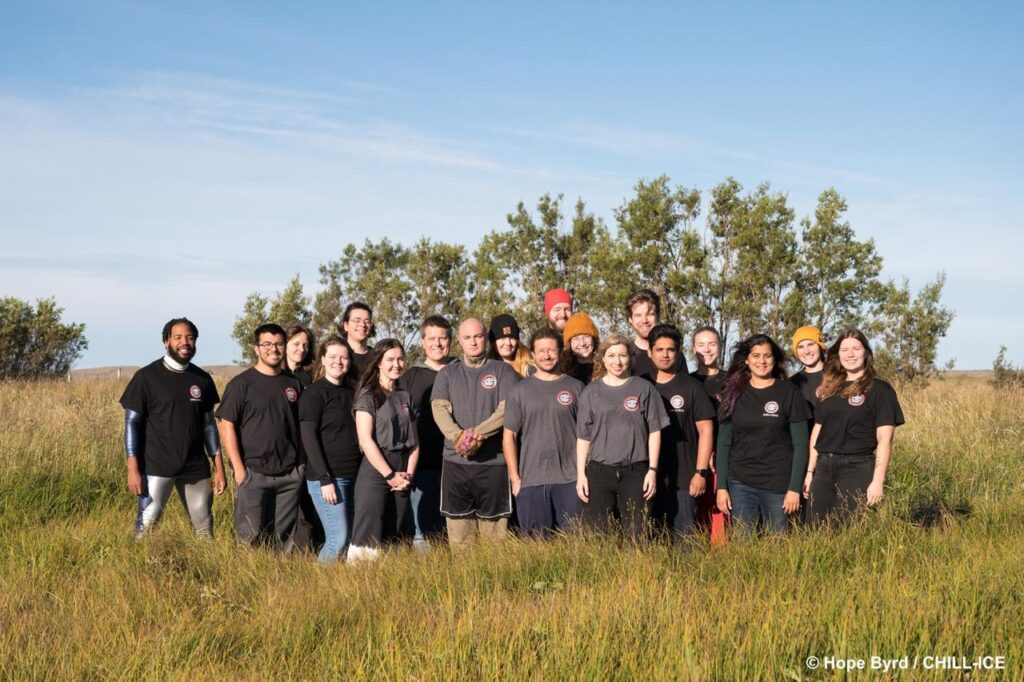
Introducing the APICES Analogue Astronauts Class of 2023

Aleš Svoboda

Mission Commander

Fighter Pilot, Member of ESA Astronaut Reserve, Ph.D. in Aircraft and Rocket Technology

Katie King

Sub Commander | Crew Scientist

CEO BioOrbit, Ph.D. Nanotechnology, Space Studies Program 2022 at International Space University

Alejandro Gómez San Juan

Mission Engineer

Associate professor at Universidad de Vigo

Javier Garrido Jiménez

Crew Scientist | Psychological Research Lead

Divemaster in the WWI wrecks of Scapa Flow, B.Sc. Psychology at Rijksuniversiteit, Neuropsychological research at University Medical Center Groningen

Margot Issertine

Medical Specalist | Crew Scientist for Blood & UV Research

Ph.D. Candidate in Space Physiology, M.Sc. Experimental & Regenerative Medicine, B.Sc. Physiology & Neurosciences, Paramedic PSE2 Diploma

Martina Dimoska

Crew Engineer | Crew Outreach Lead

B.Sc. Material Engineering and Nanotechnology, Commercial Space Studies at Florida Institute of Technology, Masters of Space Studies 2022 at International Space University