World's first underground analogue missions in the lava tubes of Iceland.

The CHILL-ICE project (Construction of a Habitat Inside a Lunar-analogue Lava-tube – Iceland) was originally founded as a Proof-of-Concept mission to showcase the importance of subsurface research, the potential of lunar habitation inside lava tubes, and the necessity of using extreme environments on Earth as a testbed for humans, instruments, and protocols. It restarted public debate on the relevance of analogue missions, resulted in numerous publications and outreach events, and it meant the official start of ICEE.Space as the first company ever to specialise in quality analogue astronaut research with completely mobile approach – leaving nothing but footprints..

Our history: The first missions

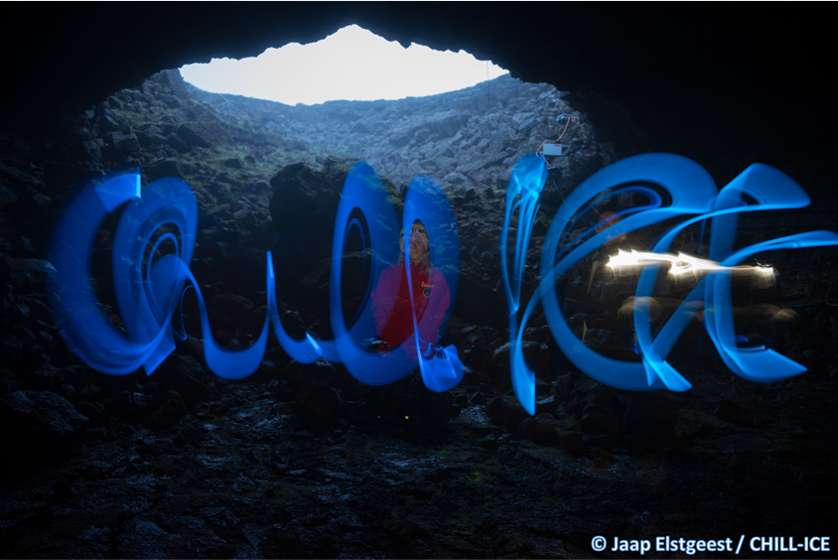
Starting out as a short analogue demonstration inside a lava tube, the first CHILL-ICE campaign consisted of two short missions that tested an inflatable habitat, set up in-situ and in-sim, inside a lava tube in Western Iceland; CHILL-ICE Luna and CHILL-ICE Lava. These missions were primarily a proof-of-concept: Can humanity use lava tubes as future bases? What are the challenges? How do humans cope with the lack of daylight, what are the psychological effects of living covered by meters of basaltic rock,  what kind of research can be done on future planetary missions from the shelter of a volcanic cave? At the same time, our core team was still developing. Nearly 30 young experts, with only a relative few analogue mission experiences under their belt, came together in Hallmundarhraun and set up an inflatable habitat, power systems, communications, a mission control centre, and collaborating with national Icelandic and international media for outreach, education, and inspiration.
– RESEARCH –

Pioneering Research that
Redefined Analogue Astronaut Missions.

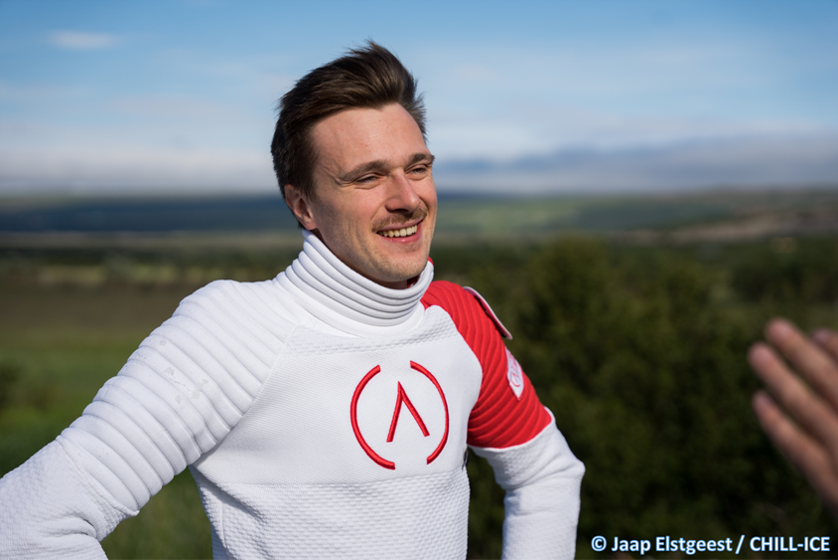
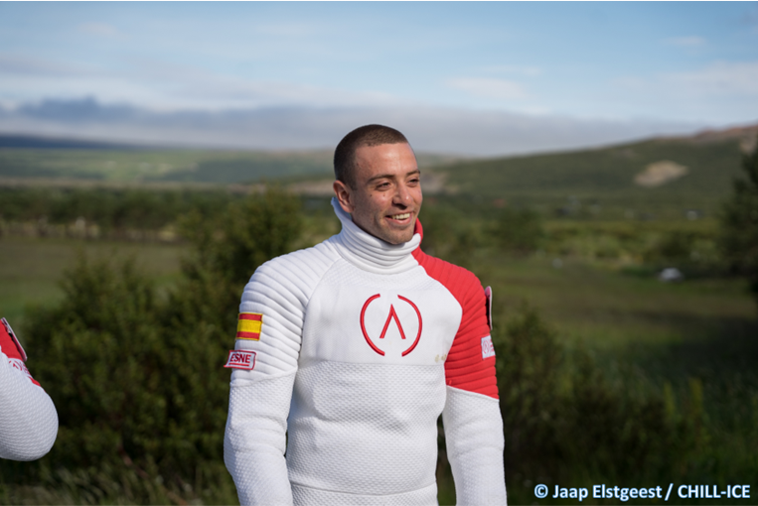
The first two daring crews of CHILL-ICE Luna and CHILL-ICE Lava were the first analogue astronauts to ever completely spend multiple days underground, inside a lava tube shelter that they deployed themselves. This was a campaign with many firsts, that has since redefined how analogue astronaut missions can focus on extreme environments and how they can not only be used as a site for extra-vehicular activities (EVA) or spacewalks, but can and should be an intrinsic part of the mission itself. This allows for higher fidelity simulations, added psychological and social immersion, and vastly extends research opportunities that require effective handling, testing, and sampling in these environments.

Shelter: ECHO

These first missions were all about doing something new, meaning that new designs and new ways of doing things were a hard necessity. This meant that, as a starting tech development company, we were looking outwards for expertise on how to create a safe, lightweight and portable, yet large enough structure for 3 humans to stay alive in. 

This was found at the Wilson School of Design of the Kwantlen Polytechnic University – where our first habitat, ECHO (Extreme cave Habitat One) was born by the hands of incredibly gifted students, talented teachers, and a healthy dose of Canadian perseverance.

Power: PVES

Any mission requires power supply. To illuminate the cave, to recharge the spacesuits, to supply power to the rovers, and warm meals for the crew, for safety, observation, and science, power supply is one of the most important systems, that should work at any time with no interruptions. Solar power will most likely be used on the Moon, and the sun is available as a power source for 21 hours per day in the Icelandic summer.  

To then also get that power tens of meters down into the lava tube where the crew is located however, is a different story. The experts from Blinkinglights helped us develop the Photovoltaic Energy System (PVES), that allowed for solar power generation, quick switching to back-up generators, and sturdy infrastructure across tens of meters of sharp basaltic rocks.

Research: Goals and Future

As this new approach of emplacing the human crew directly in the extreme environment, a lot of research analogous to actual lunar or Martian environments, are being made available to crew, including psychological, environmental, biological, geological, microbiological, anda better immersion for equipment, rover, and instrument testing.

After these two missions were completed succesfully, it showed us that the world was ready for these kinds of research campaigns. Post-mission outreach included several keynote speeches, conference abstracts, peer-reviewed publications, a TEDx talk, and interviews with national and international media. Research partnerships had been set up, and future plans started to form quickly; ready to return one year later for an even bigger, bolder, longer, and more extreme campaign.

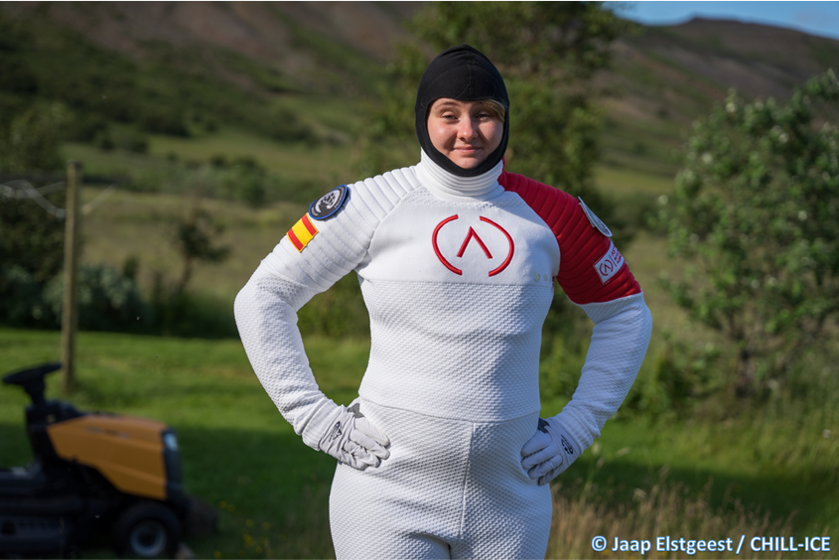
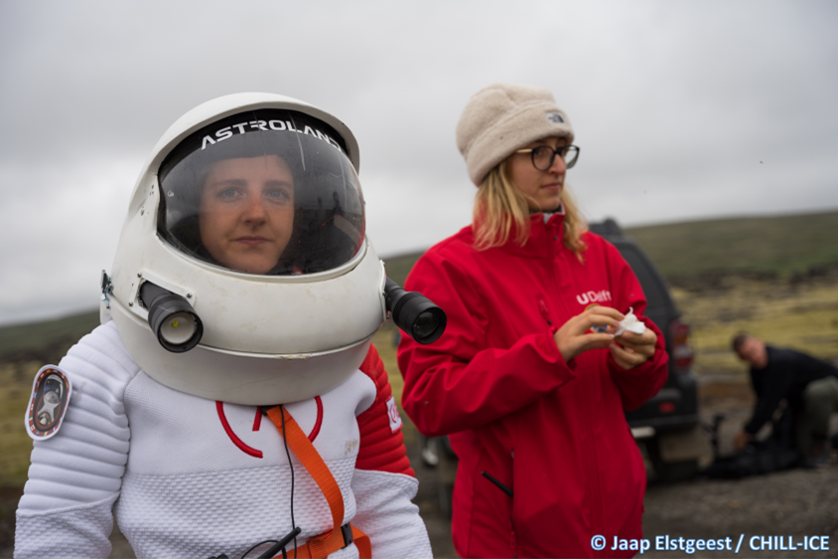
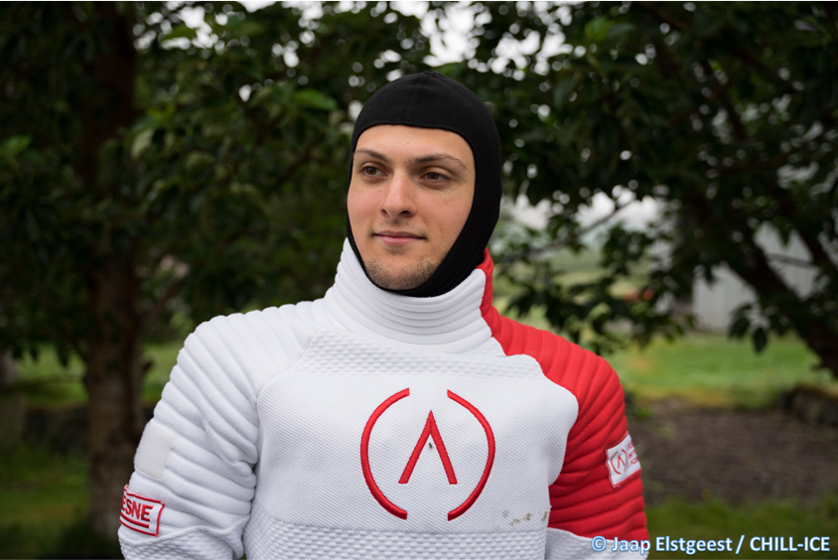
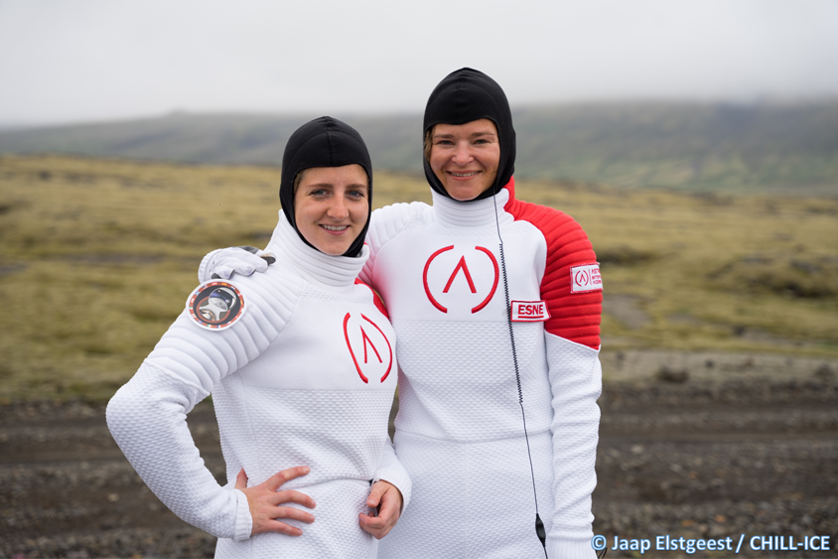
Our First Analogue Astronauts for CHILL-ICE Luna and CHILL-ICE Lava:

Christian Cardinaux

Crew Luna: Mission Commander

David James Smith

Crew Luna: Lead Scientist

Agnieszka Elwertowska

Crew Luna: Chief Engineer

Sabrina Kerber

Crew Lava: Mission Commander

Mohamad Wahidi

Crew Lava: Lead Scientist

Susan Christianen

Crew Lava: Chief Engineer